
TANGO Partners Perspective – January 2026
Keeping Employees Safe During the Winter

It’s easy to blame winter injuries on cold weather, snow or ice. But blame won’t take away the employee’s pain, lost work time or workers’ compensation costs associated with an injury/incident. Don’t wait until the snow starts flying to review winter safety plans, remind employees of cold weather hazards and ensure the tools and equipment that will be needed are stocked and ready for use. Provide employee training reminding them of safe work practices and your expectations that they will adhere to the safety policies and procedures.
Shoveling Snow Safely
- Before considering shoveling as your only option, consider mechanical methods to clear snow such as a snowblower.
- If you have to shovel, take time to warm up or properly stretch before starting.
- Do not overexert yourself. If you are not used to a heavy physical workload or have health issues take your time while shoveling snow. Depending on the severity of any health issues consider eliminating shoveling altogether by having someone else complete the task.
- Use proper work posture when shoveling. Avoid actions such as rounding your back or twisting when lifting.
- Always lift with your legs and not with your back.
- When possible, push the snow out of the way to limit lifting and throwing the snow. Pushing the snow is less hazardous than lifting and throwing snow.
- Use an ergonomically friendly snow shovel. While the overall design of snow shovels is basically the same, many have been designed with the human body in mind.
- Watch your step and ensure you are wearing the proper footwear for the task. Preventing slips, trips, and falls in winter weather conditions can be extremely difficult to do. Having the appropriate footwear and taking your time while walking can reduce the chance of these incidents occurring.
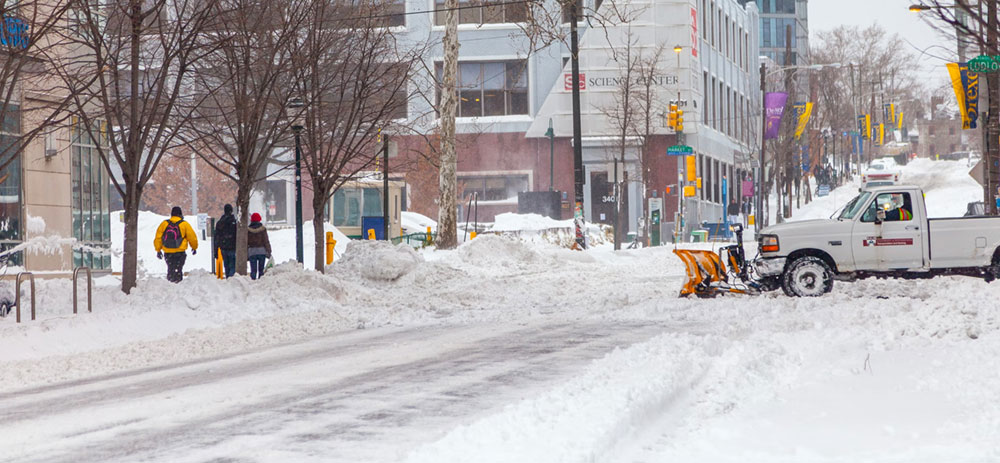 Defensive Walking
- Try “defensive walking to avoid winter slips/trips/falls.
- Plan ahead to ensure sufficient time to reach your destination.
- Use care getting in and out of the vehicle. Hold onto the door frame to steady yourself.
- Assume all wet and dark areas on pavement are slippery and icy.
- Walk in designated walkways. Avoid “off-sidewalk short-cuts” which do not receive maintenance.
- Don’t text and walk at the same time. Use available handrails.
Walk Like A Penguin
- Walk flat-footed.
- Take short steps or shuffle for stability. Concentrate on maintaining your balance. Keep your head up and don’t lean forward.
- Shorten your stride and walk slowly to safely navigate an icy path. Point your feet out slightly to increase stability.
- Keep your arms at your sides (not in your pockets) to maintain balance.
- Do the penguin shuffle.
Use Ergonomic Lifting Techniques
- Always face toward the object you intend to lift (i.e. have your shoulders and hips both squarely facing it).
- Bend at the hips, not the lower back, and push the chest out, pointing forward. Then, bend your knees and lift with your leg muscles, keeping your back straight.
- Keep your loads light and do not lift an object that is too heavy for you.
- Avoid twisting the back to move your object to its new location – always pivot your whole body to face the new direction.
- Keep the heaviest part of the object close to your body at your center of gravity- do not extend your arms to throw the snow.
- Walk to the new location to deposit the item rather than reaching or tossing the snow.
- If icy grippers are supplied remind employees that they need to follow the policy and wear them in certain conditions.
Do you want more content like this?
Become a TANGO Member (it's complimentary for nonprofits) and you'll receive our TANGO Trends email newsletter each month highlighting what is going on and the latest nonprofit specific content.
Protect Yourself From the Flu
Get vaccinated!
Vaccination is the most important way to prevent the spread of the flu. For additional information about seasonal flu vaccine priorities, see Key Facts About Seasonal Flu Vaccine by visiting:
Stay at home if you are sick. The CDC recommends that workers who have a fever and respiratory symptoms stay at home until 24 hours after their fever ends (700 degrees Fahrenheit [37.8 degrees Celsius] or lower), without the use of medication. Not everyone who has the flu will have a fever. Other symptoms could include a runny nose, body aches, headache, tiredness, diarrhea, or vomiting.
- Avoid touching your nose, mouth, and eyes.
- Cover your coughs and sneezes with a tissue, or cough and sneeze into your upper sleeve(s). Throw tissues into a “no-touch” wastebasket.
- Clean your hands after coughing, sneezing, or blowing your nose .
- Avoid shaking hands or coming in close contact with coworkers and others who may be ill.
Wash Your Hands
- Wash your hands frequently with soap and water for 20 seconds; use an alcohol-based hand rub if soap and water are not available
- When using soap and water, rub soapy hands together for at least 20 seconds, rinse hands with water, and dry completely .
- If soap and water are not available, use of an alcohol-based hand rub is a helpful interim measure until hand washing is possible .
- When using an alcohol-based hand rub, apply liquid to the palm of the hand, cover all surfaces of the hands with the liquid, and rub hands together until dry.
Download our Winter Safety Reminder sheet
CONTACT OUR
TANGO PARTNER
Nina Muniz
Account Manager
Workers’ Compensation Trust
Email:
Website: www.wctrust.com